
November 2, 2026
I recently went through a series of unfortunate events.
This past summer, my area experienced two tornadoes. My neighborhood was hit hard. Trees were uprooted, falling onto houses and blocking streets and driveways. Our basement flooded twice, forcing us to tear out floors and tear down walls.
Then I fell and injured my knee, keeping me from exercising for a week. Shortly afterward, I hurt my back.
Then we were rear-ended.
Seriously?! All in one summer?
Yet, through it all, I surprised myself with how much grace and ease I felt. I had this underlying belief that each situation would be okay and might even lead to something better.
Surprisingly, each one did.
The flooding forced us to redo our basement, something we'd wanted to do for some time, and we were provided the resources to make it happen. My injuries forced me to rest, giving me space to reconsider my schedule and create more balance. The car was repaired, and thankfully, the accident didn't significantly disrupt our lives.
Looking back, I found myself grateful for these unfortunate events. Each disruption opened the door to something better.
As someone who leads an organization devoted to creating change, I've learned that how I move through life's disruptions also shapes how I navigate the inevitable storms of leadership.
I've come to appreciate the power of gratitude through it all.




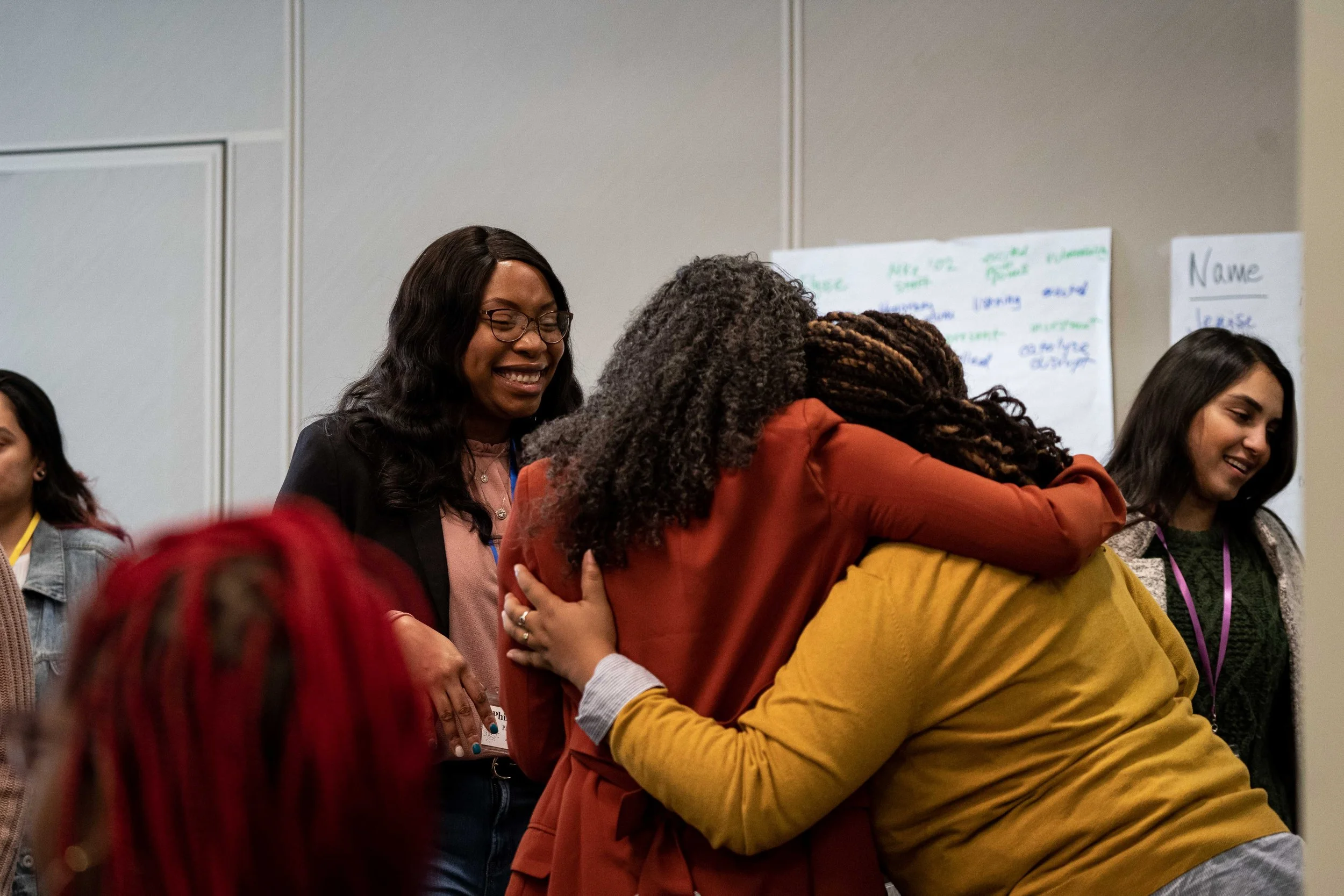
*Moments of joy and gratitude from BECOME’s Love and Liberation Festival
Gratitude as a Leadership Practice
Leadership and changemaking are full of storms.
There are countless no's, financial ups and downs, difficult decisions, team conflicts, political tumult, and moments when the weight of responsibility feels especially heavy.
There are times when we pour ourselves into our work, giving more than people will ever see or understand. Sometimes, the very people we're trying to support don't seem to recognize the depth of what we're giving.
It's easy to become discouraged, angry, exhausted, resentful, or ready to walk away.
I've experienced all these feelings over the years, and I've found that gratitude can be our saving grace.
Gratitude helps me reconnect to what matters, why I began this work, the people who make it meaningful, and the possibilities that still exist when circumstances are difficult.
Sometimes, it's gratitude for a team member who shows up with care and commitment. Sometimes, it's gratitude for a difficult conversation that reveals something we needed to address. Sometimes, it's gratitude for a closed door that leads us in a more aligned direction.
Sometimes, it's simply gratitude that we've made it through another day.
There's research supporting the power of this practice. Psychologists Robert Emmons and Michael McCullough found that people who regularly recorded things they were grateful for experienced greater wellbeing across several measures, particularly positive emotions. A broader review by Alex Wood and colleagues also connected gratitude with wellbeing, relationships, and how we cope with life's challenges.
I find this especially relevant for those of us leading people and working to create change. Our state of being influences how we show up, relate to others, make decisions, and cultivate the environments around us.
When we're consumed by frustration, it becomes harder to see possibilities. Gratitude can help us approach challenges with greater clarity, patience, and openness.
Imagine what becomes possible when we cultivate gratitude within ourselves and throughout the organizations and communities we lead.
Being Grateful for It All
In my personal life, gratitude uplifts me.
It brings joy amid sorrow, love amid conflict, and ease amid tension.
When I wake up feeling grateful, regardless of the day's circumstances, something shifts. The day feels brighter. My mind becomes clearer. The fog begins to dissipate, and I feel reenergized.
The circumstances may be exactly the same, but my experience of them changes.
I also believe there's something profound about learning to appreciate experiences we initially resist.
The darkness helps us recognize the light more clearly. The dirt provides nutrients and a foundation for the flowers and trees that eventually feed and nourish us. Even storms can clear away what is no longer standing strong and make room for new growth.
Of course, some storms bring real loss, grief, and devastation. We can grieve what we've lost, acknowledge what's difficult, and still remain open to what life may be teaching or revealing.
One of my best friends, Sayoko Hamilton, who founded Lachesism, introduced me to this fascinating concept. The word lachesism, coined by John Koenig in The Dictionary of Obscure Sorrows, describes a longing for the clarity that can come from disaster or disruption, when life is shaken so profoundly that we suddenly see what matters most.
I find that idea intriguing.
Why is it that sometimes we need a major disruption to make changes we've known we needed to make? Why does it sometimes take losing something to recognize its value? Or having our routines interrupted to realize that a different way of living might serve us better?
What if we could cultivate that clarity and appreciation more intentionally, without waiting for the next storm?
As we move through November, a month when gratitude often takes center stage, I invite us to reflect on this more deeply.
Whether you celebrate Thanksgiving or choose to honor the month differently, recognizing the painful history associated with the holiday, we can still embrace the opportunity to be grateful.
For the beautiful moments. For the people who love us. For our accomplishments and opportunities. For the challenges that stretch us. For the unexpected turns that lead us somewhere new. And perhaps, eventually, for the experiences we never would have chosen but that helped shape who we are becoming.
Three Practices for Cultivating Gratitude
1. Begin your day with gratitude and intention.
Each morning, write down four things you're grateful for. Then write about the day you want to have. How do you want to feel? How do you want to show up? What do you want to create or experience?
2. Notice the small things.
Keep a gratitude journal and capture the little moments that bring you joy, peace, love, or connection. A beautiful sunset. A kind word. A good laugh. A moment of stillness. Give yourself space to appreciate the beauty already present.
3. Thank yourself.
Look in the mirror and thank yourself for at least three things. Maybe it's your courage, your compassion, your persistence, or how you showed up for someone when you were tired. You are worthy of your own gratitude, too.
As we move through this season, may we cultivate gratitude for the fullness of life, for what brings us joy, what stretches us, what challenges us, and what helps us grow.
And when the next storm comes, as storms inevitably do, may gratitude help us remember the strength, love, and possibilities that remain.
A Little Gratitude for Yourself or Someone You Love
As we move through this season of gratitude, consider treating yourself or someone you love to something that inspires joy, reflection, and becoming. We're offering a special discount on our Soulful Goods collection from November 9th – 30th.
A little something to remind yourself or someone special of all there is to be grateful for.
References
Emmons, R. A., & McCullough, M. E. (2003). Counting blessings versus burdens: An experimental investigation of gratitude and subjective well-being in daily life. Journal of Personality and Social Psychology, 84(2), 377–389.
Wood, A. M., Froh, J. J., & Geraghty, A. W. A. (2010). Gratitude and well-being: A review and theoretical integration. Clinical Psychology Review, 30(7), 890–905.